
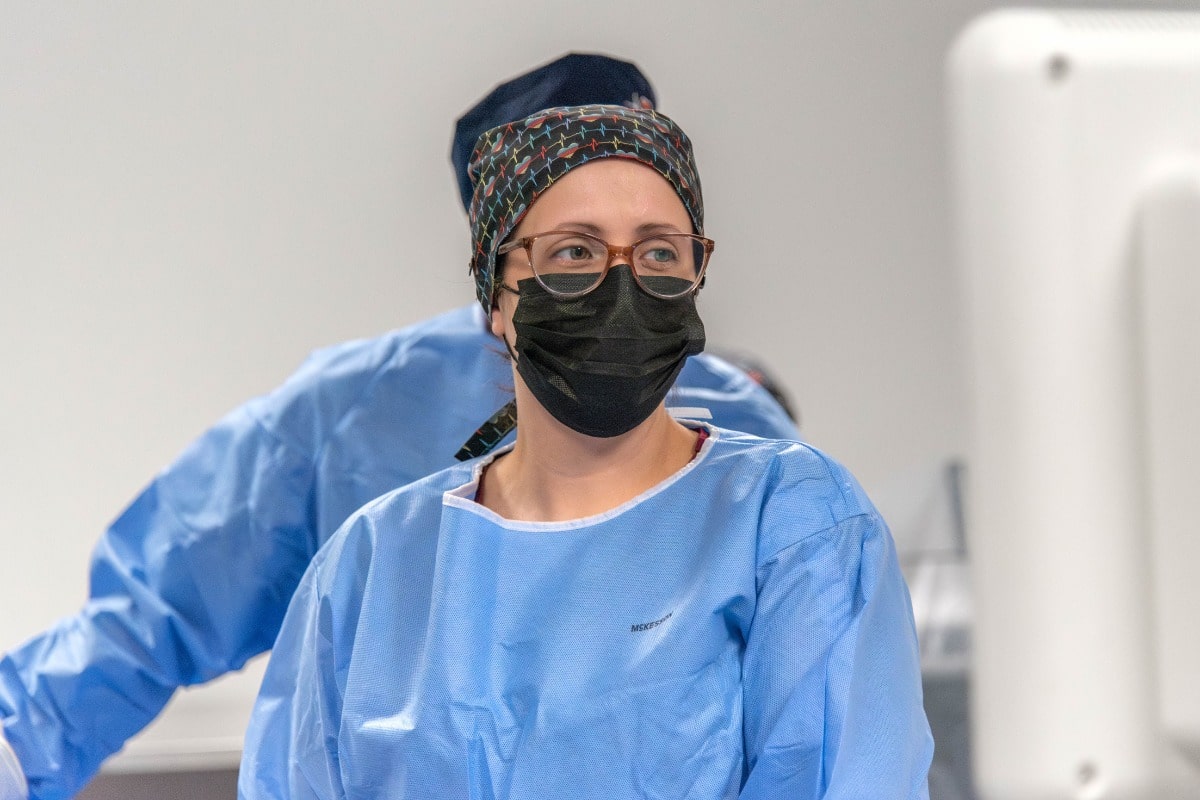
Catheter ablation is a minimally invasive procedure used to treat certain types of cardiac arrhythmias or abnormal heart rhythms. It works by targeting and treating very small areas of heart tissue that are responsible for abnormal electrical signals, helping restore a normal heart rhythm. At Oracle Heart & Vascular, our experienced cardiology specialists use catheter ablation using advanced imaging and heart-mapping technology for precision and safety.
What Does Catheter Ablation Treat?
Your heart has an electrical conduction system that controls when and how the heart beats. Electrical impulses normally travel in an organized pathway from the upper chambers of the heart to the lower chambers, allowing the heart to pump efficiently.
When this system does not function properly, arrhythmias (abnormal rhythms) can occur, causing the heart to beat too fast, too slow or irregularly.
Common arrhythmias treated with catheter ablation include:
What Is Catheter Ablation?
Typically performed after an Electrophysiology (EP) Study, catheter ablation helps identify both the location and cause of abnormal electrical signals in the heart. During ablation, our heart and vascular specialist ablates (destroys) the areas of heart tissue that trigger abnormal rhythms. Removing these abnormal pathways allows the heart to return to a normal rhythm. The treated areas are very small and do not affect the heart’s ability to pump blood.
What Happens Before the Procedure?
When you arrive at the hospital, one of our team members will bring you to your room where you’ll complete paperwork and changing into a hospital gown.
We’ll then prepare your skin at the catheter insertion site. Our team will also:
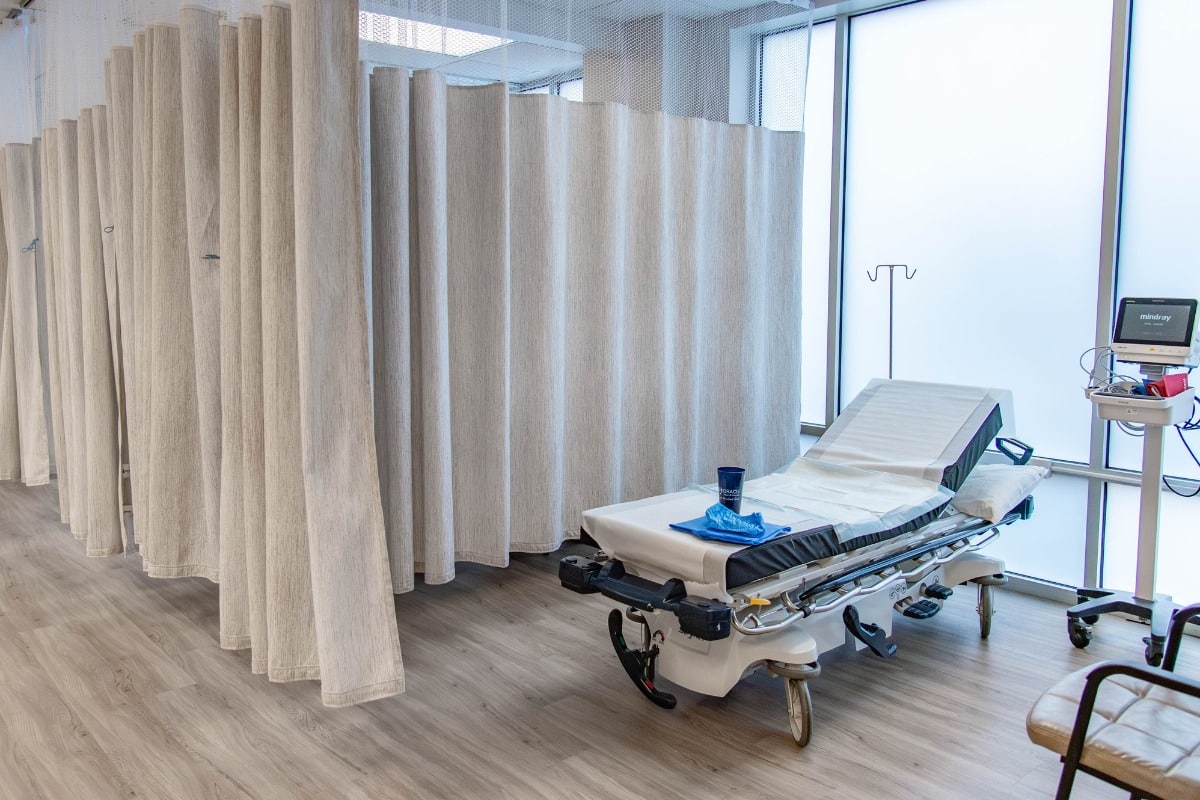
What Happens During The Procedure?
The procedure typically lasts 2 to 6 hours, depending on the type of arrhythmia being treated. Some patients are fully sedated, while others receive lighter sedation depending on the procedure. During the procedure, you can expect the following:
What Happens After the Procedure?
After ablation, you will return to your room where nurses will monitor heart rhythm and blood pressure. You may need to lie flat for 2 to 4 hours to prevent bleeding with pressure applied to the insertion site. If you experience temporary numbness or weakness in your leg, our team can assist you when getting up. You may be encouraged to drink fluids to help flush contrast dye from your body.
Catheter Ablation Recovery
You may go home the same day or stay overnight. If the catheter was placed in your groin, avoid sitting with the leg bent. Rest and avoid strenuous activity. Over the next 48 hours, watch for swelling or bleeding at the insertion site. Avoid bending, squatting, climbing stairs, running or lifting over 10 pounds. Take short walks (5-10 minutes) several times a day.
Catheter Ablation FAQs
We’re here to help you feel comfortable and informed ahead of your procedure. To learn more about the procedure, recovery and heart and vascular care at Oracle Heart & Vascular, continue reading.
Patient-Centered Care Is At The Heart Of What We Do
Oracle Heart & Vascular proudly serves the Fredericksburg and King George communities with compassionate, patient-focused cardiovascular care. Our experienced team is committed to delivering advanced treatment, personalized support and clear patient education so you feel informed and confident every step of the way. Schedule your appointment today and take the next step toward better heart health with a team that puts you first.
Fredericksburg
1011 Care Way, Fredericksburg, VA 22401
King George
15521 Real Estate Ave, Suite 202, King George, VA 22485
Fax
(877) 916-0801